
Campfires reconnect us with nature, offering warmth, bug protection, and a cozy centerpiece for gatherings, whether camping with friends or stargazing in your backyard. In addition to that, they’re perfect for cooking nearly anything, from basic burgers to gourmet kebabs. Here are 7 tips for campfire cooking:
1. Check Weather and Location
Safety first—fire’s no joke. Check the forecast and local burn laws before setting up your fire site. Skip dry or windy days since embers can spark trouble. Pick a spot 15 feet away from flammables, such as trees, tents, or your gear. Campgrounds often provide fire pits or rings; if not, make sure you set yours up correctly.
2. Gather the Right Gear
Keep water, sand, or a shovel handy to douse rogue flames. Never leave the fire unattended, and fully extinguish it when done. A first-aid kit on hand can help minor injuries. Tip: periodically dip your fingers in cold water when handling hot food.
3. Build a Proper Fire
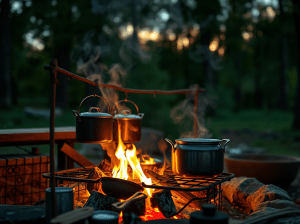
A good cooking fire isn’t a bonfire. Stack dry, seasoned wood — maple, oak, or hickory for flavor — in a tee-pee or lean-to shape for controlled flames. Wet or sappy wood? Pass. Follow your recipe’s heat needs to avoid charring your meal into oblivion. A huge fire may look cool but it’ll ruin your food.
4. Prepare Food
Chop, measure, season, or marinate your food before you go. Sealed containers keep ingredients tidy. Knowing what you’d like to make ahead of time streamlines the process so you can enjoy yourself more. If you’re using flavored woods, have them ready to go.
5. Keep Food Fresh
For campground trips, pack multiple coolers with ice packs — frozen pouches of food double as cooling power. Balance your ice and space: too little and you risk food spoiling; too much and it’s cramped.
6. Pick the Right Cookware & Utensils

Open flames demand tough gear — cast iron, stainless steel, or titanium. Consider grates to grill burgers, a Dutch oven to simmer chili, or even a tripod to hoist a pot above the flames. Match your cookware to your menu. One-pot meals in cast iron — like beef stew or chili — are foolproof and tasty. Or go big and spit-roast a lamb leg.
Don’t forget the specific utensils you need—tongs for flipping bacon, skewers for kebabs, or spatulas and grill baskets for grilling fish. Remember to bring oven mitts and a meat thermometer.
7. Clean Up Correctly
Don’t be an idiot — trash isn’t nature’s friend — use proper trash bins, not the ground. Food scraps draw pests or worse, bears. I’ve been camping multiple times when a bear decided to check out our campsite in the wee hours. We were thankful each time there was no food around for them to get into. If you use cookware and utensils, clean them per site rules or as gently as possible to not disturb the environment. Be sure the fire is completely out.
Read more tips here (on Tasting Table)
Learn how to make the most of your meat.
Want more food related content? Check out the Happy Belly Cafe.
Discover more from The Purple Sneaker
Subscribe to get the latest posts sent to your email.
 The Purple Sneaker